

3 minute read
Food and beverages (drinks) allergies are major conditions affecting millions of people worldwide.
A staggering 2.4 million people that’s 1 in 4 people in the UK have a clinically confirmed food allergy, including approximately:
The number of people in the UK with food and drink allergies has more than doubled since 2008, with the biggest increase in young children.
Food businesses, such as cafés, restaurants, and caterers that sell food to customers, must be transparent and provide visible information on allergens contained in the food and drinks they sell.
Food businesses are required by law to:
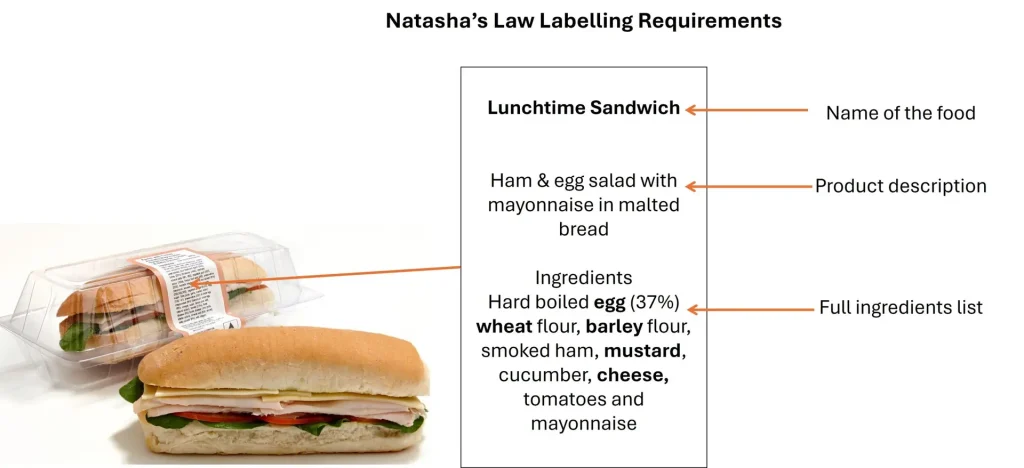
Natasha Ednan-Laperouse, a 15-year-old, died from an allergic reaction after consuming a baguette sandwich from an airport food shop in the UK in 2016. The sandwich, which contained allergens not listed on the label, caused Natasha to suffer a heart attack despite her father’s attempts to administer life-saving medication.
Natasha’s parents successfully campaigned for “Natasha’s Law,” which came into effect in October 2021 requires UK food businesses to label all ingredients and allergens on food made and sold on the premises.
Natasha’s Law is a regulation that helps keep food safe for customers with food allergies or intolerances.
By following this law, and providing full allergen information on the menu, a chalkboard, website or in an information pack, provides safe meals to these customers, while helping your business grow.
The main responsibilities for all food businesses under this Act are:
This regulations that came into effect on 14th July 2014 means that food businesses must:
| Cookie | Duration | Description |
|---|---|---|
| cookielawinfo-checkbox-analytics | 11 months | This cookie is set by GDPR Cookie Consent plugin. The cookie is used to store the user consent for the cookies in the category "Analytics". |
| cookielawinfo-checkbox-functional | 11 months | The cookie is set by GDPR cookie consent to record the user consent for the cookies in the category "Functional". |
| cookielawinfo-checkbox-necessary | 11 months | This cookie is set by GDPR Cookie Consent plugin. The cookies is used to store the user consent for the cookies in the category "Necessary". |
| cookielawinfo-checkbox-others | 11 months | This cookie is set by GDPR Cookie Consent plugin. The cookie is used to store the user consent for the cookies in the category "Other. |
| cookielawinfo-checkbox-performance | 11 months | This cookie is set by GDPR Cookie Consent plugin. The cookie is used to store the user consent for the cookies in the category "Performance". |
| viewed_cookie_policy | 11 months | The cookie is set by the GDPR Cookie Consent plugin and is used to store whether or not user has consented to the use of cookies. It does not store any personal data. |